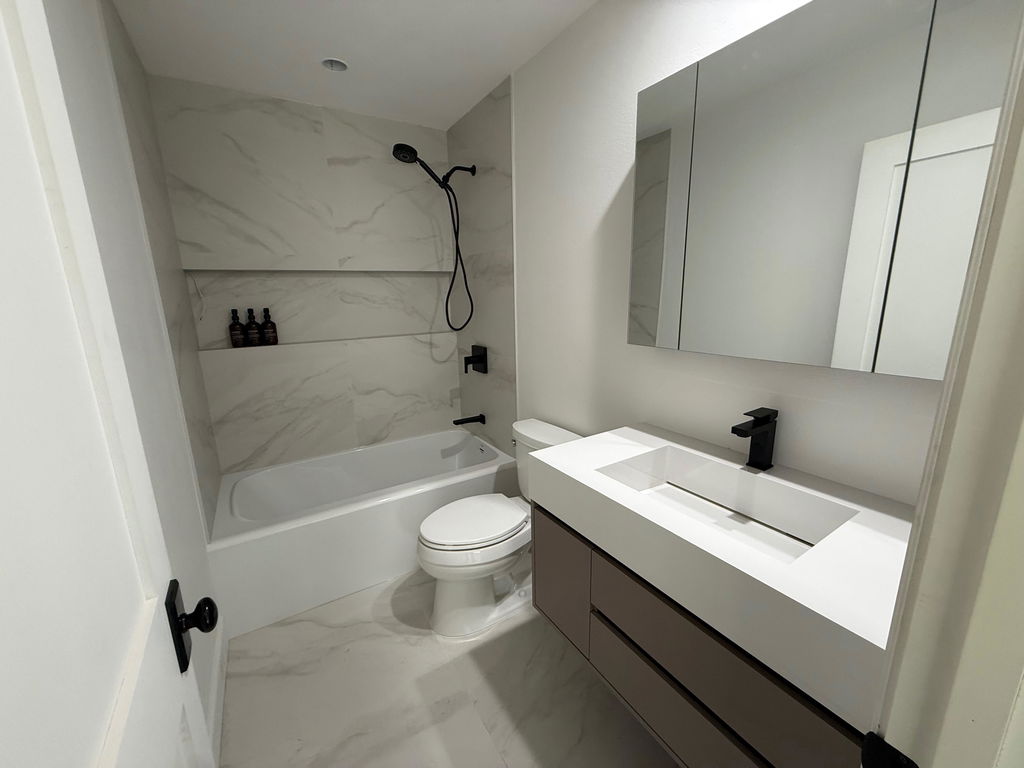
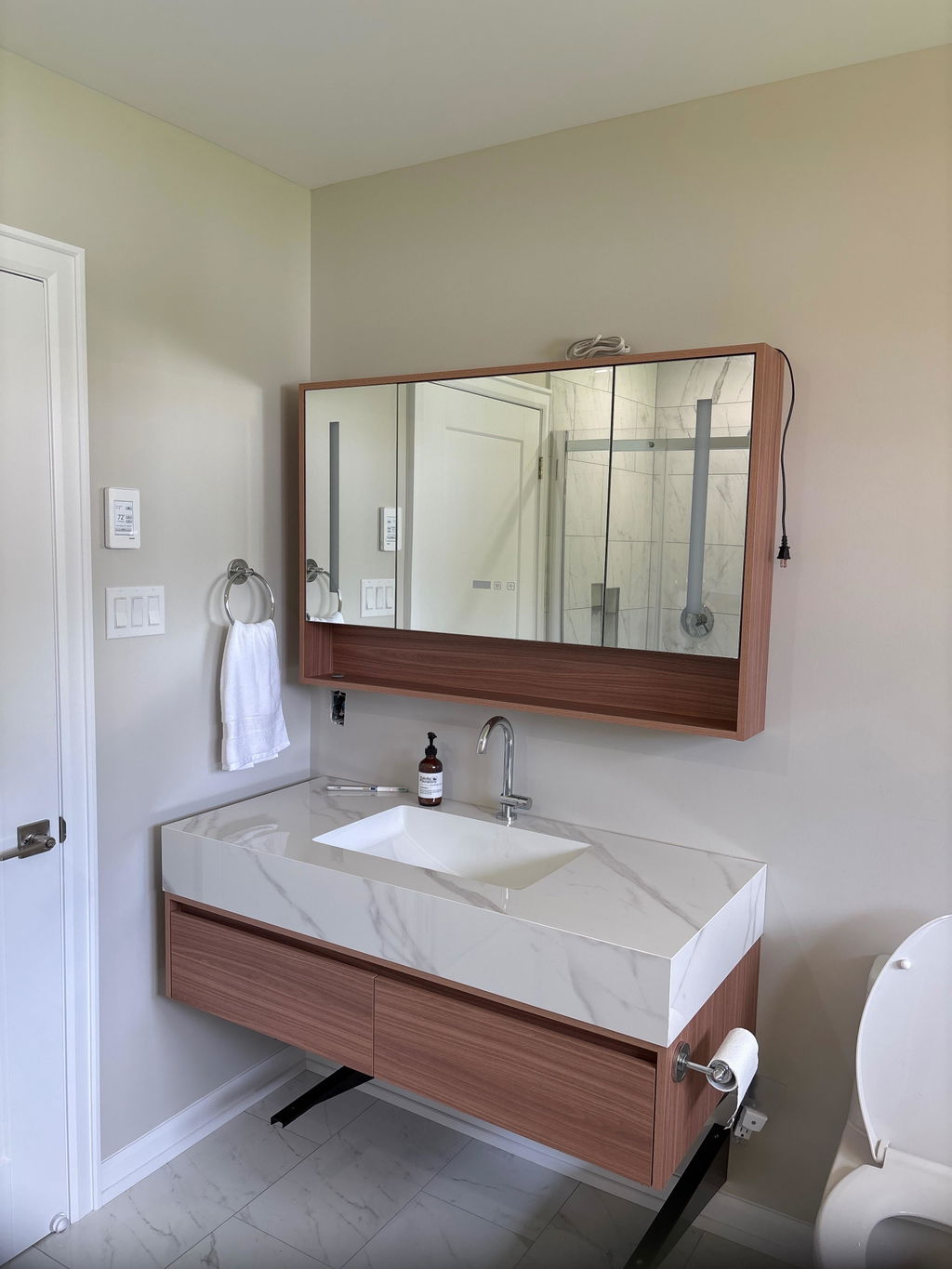
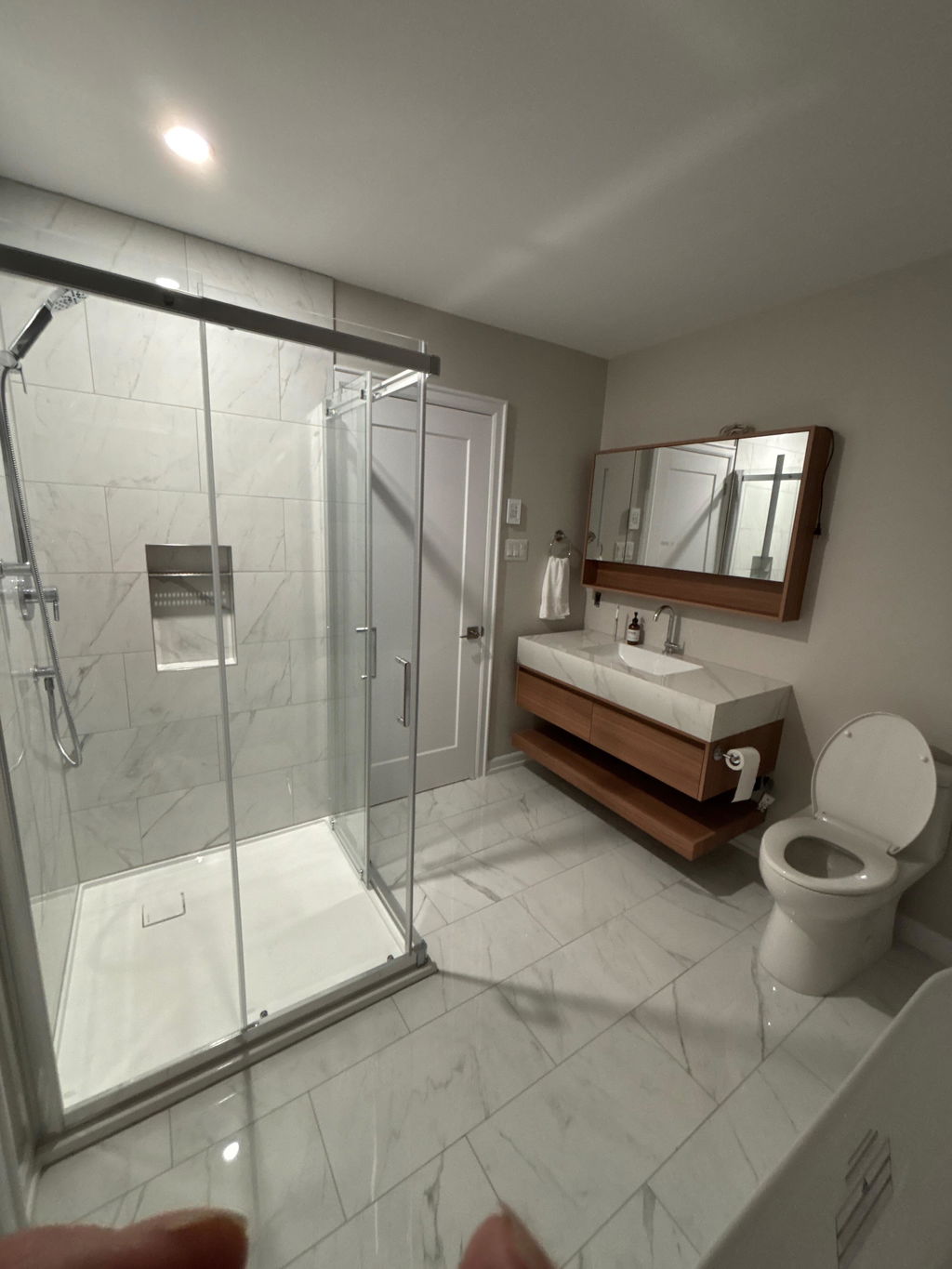
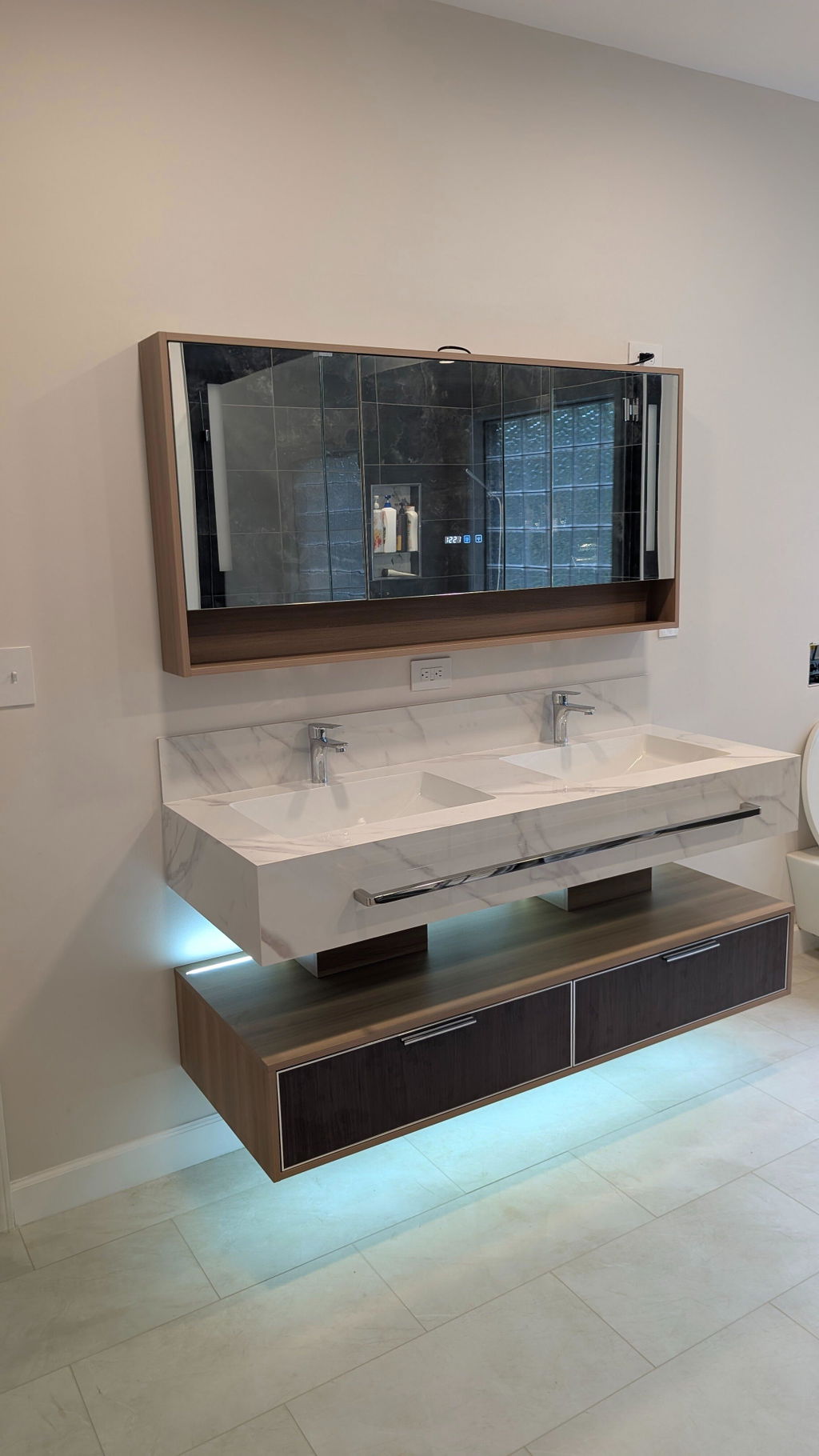
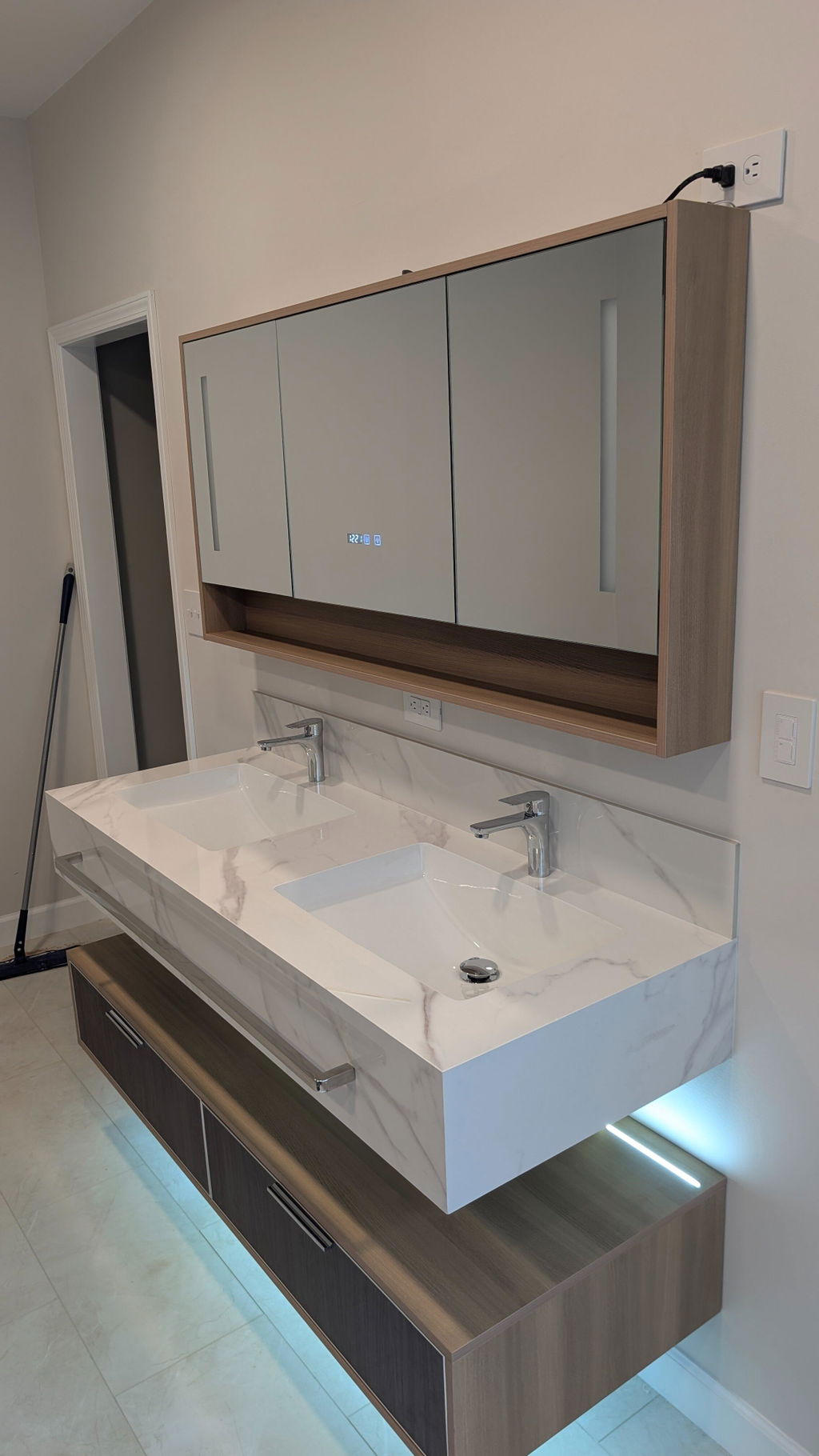
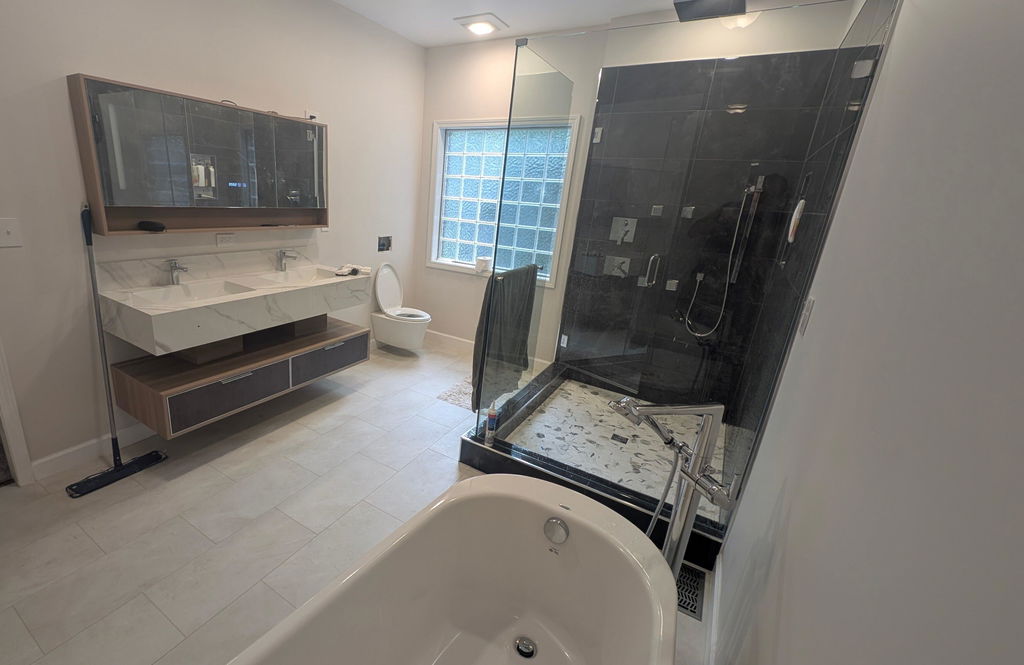
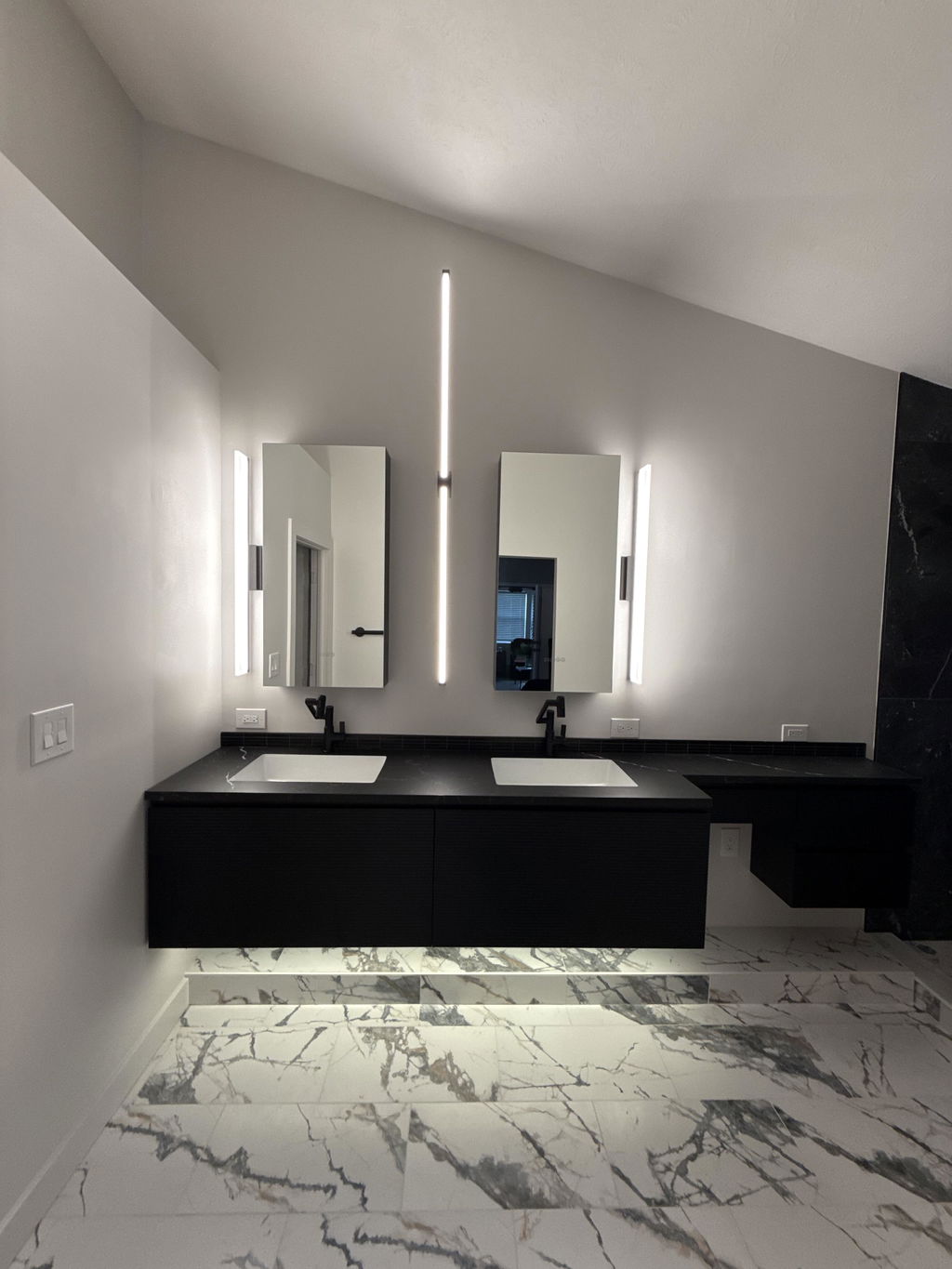
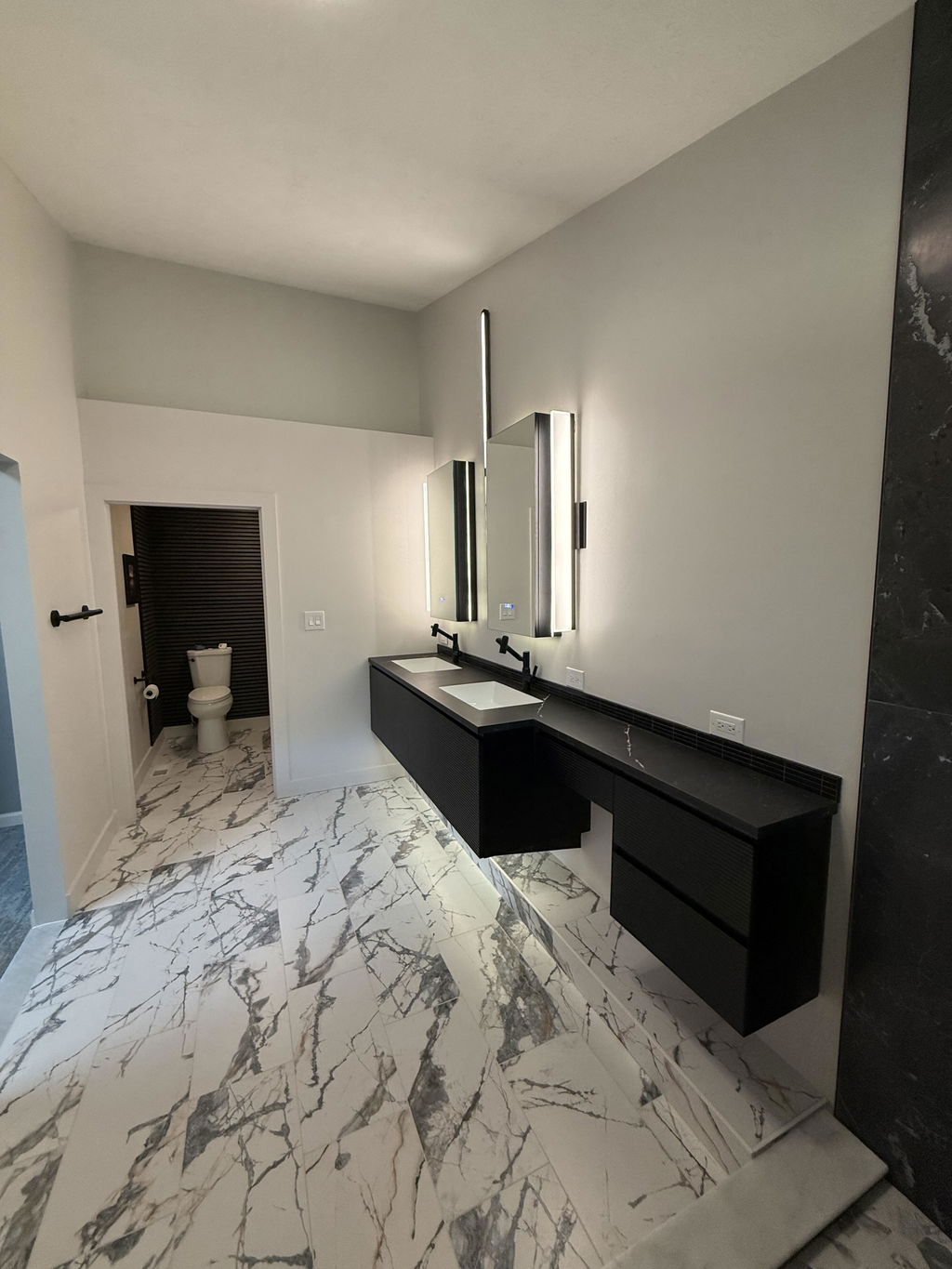
Best Materials for Bathroom Vanities: Cabinet to Countertop
|
|
Time to read 21 min
|
|
Time to read 21 min
For most bathrooms, plywood is one of the best all-around materials for a vanity cabinet, and sintered stone is one of the toughest vanity tops to live with day to day.
But the best materials for bathroom vanities aren't the same for every project — a powder room used twice a day has different needs than a kids' bathroom with wet counters every morning.
This guide walks through cabinet materials, countertop materials, and how to match both to your bathroom, budget, and tolerance for upkeep.
Table of contents
A vanity is really two separate material decisions — the cabinet and the top — so "best" changes depending on what you're solving for:
None of these are universal winners. A material that holds up well in a steamy, high-traffic family bathroom isn't necessarily the right call for a powder room that mostly needs to look good. The rest of this guide breaks down why, starting with what a vanity is actually made of.

Ask about the best material for a bathroom vanity, and you're really asking three or four smaller questions at once, since a single vanity typically combines:
Mixing and matching is normal. A plywood cabinet box with MDF shaker doors and a quartz top is one of the most common combinations sold today, and it's not a compromise — it's just three different materials doing three different jobs.
Plywood is generally the best material for bathroom vanity cabinet boxes because it balances strength, moisture tolerance, screw-holding ability, and cost better than the alternatives.
That doesn't rule out solid wood, MDF, particleboard, or PVC — each fits a different budget or bathroom condition.

Plywood is built from thin layers of wood veneer, glued with the grain running in alternating directions. That cross-grain structure is what makes it resist warping and swelling better than MDF or particleboard.
Cabinet-grade plywood, usually faced in birch or maple, is the standard for vanity boxes. Look for a void-free core rather than just counting plies — gaps inside a lower-grade sheet are what eventually let screws pull loose.
UpVanity builds its cabinet boxes from multilayer solid wood - what the industry generally calls plywood - because of its stability and moisture resistance. It's one of the materials we use most often.

Solid wood — oak, maple, birch, and similar species — gives a vanity real depth and grain that engineered materials can't fully replicate. Oak and maple are the two most common choices.
They're dense enough to hold up to daily hardware use and take stain evenly, while softer woods dent more easily around handles and drawer edges.
UpVanity's solid wood vanity cabinets are built with this trade-off in mind — a solid starting point if you want that natural grain without going fully custom.

Medium-density fiberboard is made from fine wood fibers pressed with resin into a dense, uniformly smooth panel. That's exactly why it's the go-to material for painted shaker doors.
The same density also holds crisp routed edges and beveled details that plywood can't reproduce as cleanly — which is why most flat-panel and shaker doors on the market are MDF rather than solid wood.

Particleboard is the least expensive engineered wood option, made from coarser wood chips and resin pressed into panels.
It shows up most often in big-box, ready-to-assemble vanities under a laminate or thermofoil skin. That skin can make the surface look identical to plywood, right up until it peels or chips at an edge.

PVC cabinet boxes are made from engineered polymer rather than wood. Manufacturers extrude it into rigid panels, then finish them with a printed or laminate skin to mimic painted or wood-grain cabinetry. This category shows up mostly in the ready-to-assemble rental and budget market.
Countertop material gets the most attention in most vanity searches, and for good reason — it's the surface you touch, clean, and look at every day.
Sintered stone is the strongest answer to "best material for bathroom vanity top" once you factor in heat and staining, though quartz, granite, marble, porcelain, solid surface, and a few budget options each have a real place depending on how the bathroom is used.

Sintered stone is made by compressing a blend of quartz, feldspar, glass, and mineral oxides under extreme heat and pressure - a manufacturing process similar to porcelain, but pushed further.
The result is an extremely dense, non-porous slab that resists heat, UV exposure, staining, and scratching better than almost any other countertop material, including quartz.
Sintered stone holds up to daily heat, sunlight, and staining better than anything else on this list, including quartz - which is why it's what most of UpVanity's vanity tops use.

Quartz countertops are engineered from crushed natural quartz bound with resin. That gives them a very low, generally non-porous surface, though porosity can vary slightly by product line — always check the manufacturer's data sheet.
Most slabs run around 90 percent crushed quartz to 10 percent polymer resin and pigment. That resin is also what gives manufacturers tight color consistency from batch to batch, something natural stone can't offer.
Our take: The heat question comes up constantly with quartz, and it's a fair one — the resin binder is exactly why a flat iron left too long can scorch or discolor the surface. If that's a dealbreaker, sintered stone solves it without giving up the low-maintenance appeal quartz is known for.

Granite and quartzite are both natural stones prized for one-of-a-kind veining and speckling, but they form differently. Granite is an igneous rock with visible mineral flecks. Quartzite is a metamorphic stone that's typically harder and more scratch-resistant.
Both are quarried in large blocks and cut into slabs, so no two pieces are ever truly identical — worth remembering if you're ordering from a photo rather than seeing the actual slab first.
Our take: "Granite needs sealing" doesn't hold up slab to slab — some barely absorb anything, others need yearly attention. The difference is the individual piece, not the label, so ask your fabricator about the water-absorption results before you assume either way.

Marble is the material most people picture when they think "luxury bathroom counter." The veining is genuinely unique slab to slab.
Carrara and Calacatta are the two varieties most buyers recognize by name — the price gap between them mostly comes down to how dramatic and consistent that veining is, not a difference in durability.
Our take: Marble owners rarely regret how it looks — the trade-off is the upkeep. Daily splashes can eventually leave the surface etched or dull, sometimes requiring professional polishing and resealing. If you love the look, just know that marble needs more care than quartz.
UpVanity's marble vanity tops bring that veining to a ready-made vanity set if you'd rather skip the custom-fabrication process.

Porcelain slabs are a dense, high-fired type of ceramic. That density gives them strong resistance to heat and staining, along with a wide range of stone-look finishes.
Manufacturing advances out of Italy and Spain have also pushed slab sizes larger over the past decade, so a typical vanity top today often needs fewer seams than porcelain options did several years ago.

Solid surface — the category that includes brands like Corian — is made from acrylic or polyester resin filled with minerals. It can be thermoformed into a countertop and integrated sink as a single seamless piece.
Cultured marble is a related but different material: crushed marble or limestone mixed with resin and finished with a gel coat, molded as an integrated top-and-sink unit.
Because solid surface is thermoformed rather than cut from a rigid slab, it can also be shaped into integrated backsplashes or curved edges — something stone or quartz can't easily replicate.
Our take: We see this pattern often: quartz for the kitchen, solid surface for the bathroom. It's not a downgrade — the seamless integrated sink matters more at a vanity used several times a day than quartz's extra hardness.
If a seamless top-and-sink is the deciding factor, UpVanity's integrated-sink vanity sets are built around that one-piece design.

These three show up most often in budget renovations. Each has a specific weak point worth knowing before you buy.
Laminate tops are typically post-formed with a rolled front edge, which removes one seam compared to tile or wood. That's a small detail, but seams are where most water damage starts.
Sink mounting style also shapes which countertop materials will work, so it's worth deciding early rather than after the top is already ordered.
Want to build your own combination? UpVanity offers slate, marble, quartz, and luxury stone tops across our vanity sets — contact us and we'll walk you through the process for your combination.
This chart uses relative ratings (High / Medium / Low) based on how these materials generally perform, not a lab test of any specific product. Confirm exact specifications with your manufacturer or fabricator before buying.
"Relative cost" reflects typical material-only pricing tiers; installed cost varies by region, fabricator, and year, so always get a local quote for the true bottom line.
Here's the quick visual version — the full comparison table below covers scratch/stain resistance, repairability, and more.

| Material | Component | Moisture Resistance | Durability | Scratch/Stain Resistance |
Maintenance | Repairability | Relative Cost | Best For |
|---|---|---|---|---|---|---|---|---|
| Plywood | Cabinet | High | High | N/A | Low | Medium | Mid | Daily-use bathrooms |
| Solid wood | Cabinet/doors | Medium–High (with sealing) | High | N/A | Medium | High | High | Premium bathrooms |
| MDF | Doors/select cabinet parts | Medium | Medium | N/A | Low | Low–Medium | Low–Mid | Painted doors, lower-use baths |
| Particleboard | Cabinet | Low–Medium | Low–Medium | N/A | Low | Low | Low | Budget or short-term use |
| PVC | Cabinet | High | Medium–High | N/A | Low | Medium | Mid | Budget rentals or short-term flips |
| Sintered stone | Vanity top | Very High | Very High | Very High | Very Low | Low | High | Heat- and UV-heavy bathrooms |
| Quartz | Vanity top | Very High | High | High | Very Low | Low–Medium | Mid–High | Low-maintenance use |
| Granite | Vanity top | High (with sealing as needed) | High | High | Medium | Low | Mid–High | Natural-stone preference |
| Marble | Vanity top | Medium | Medium | Medium–Low | High | Low | High | Luxury appearance |
| Porcelain | Vanity top | Very High | High | High | Low | Low | Mid–High | Heat and stain resistance |
| Solid surface | Vanity top | High | Medium | Medium | Low | High (minor scratches) | Mid | Integrated sink designs |
| Laminate | Vanity top | Low–Medium | Low–Medium | Medium | Low | Low | Low | Budget renovations |
Note: N/A under Scratch/Stain Resistance means it doesn't apply — cabinet materials are covered by doors and finishes, not exposed like a countertop. Repairability means how easily damage can be fixed, not how often it happens.
Once you know how a room is actually used, matching a cabinet material to a top material becomes a lot more straightforward.

This is where daily use adds up over years, so it's worth investing in materials that hold up long term. Plywood or sealed solid wood keeps the cabinet stable, while sintered stone or quartz gives the countertop the stain resistance and durability that everyday use demands.
Toothpaste splatter and constant hand-washing happen multiple times a day here, so quartz or porcelain's stain resistance ends up mattering more than marble's good looks.
A plywood cabinet handles the moisture well, and double-sink space can cut down on morning bottlenecks if the room allows for it.
This room sees a fraction of the daily wear a primary bathroom does, so it's reasonable to spend less on the cabinet and put those savings toward a countertop that still looks good to visitors. Solid surface or cultured marble covers that need without the higher cost of natural stone.
Since it's used only occasionally and is often the smallest room in the house, there's more room to prioritize looks over heavy-duty durability. Quartz, marble, or even laminate can all work well depending on how much you want the design to stand out.
Cost control and easy replacement between tenants matter more than luxury in this setting. PVC or a budget engineered wood cabinet paired with cultured marble or laminate keeps repairs simple and inexpensive when something needs to be swapped out.
Here, appearance and finish quality lead the decision rather than budget. Solid wood or premium plywood paired with marble, sintered stone, or a premium quartz delivers the high-end look most buyers are after in this kind of space.
UpVanity's bathroom vanity sizing guide covers the width, depth, and clearance planning that goes with this decision.

Natural stone benefits from periodic sealing, though the right interval depends on the stone's porosity - ask your fabricator rather than assuming a fixed schedule.
Quartz, porcelain, and sintered stone typically skip sealing altogether, since their low porosity is built into the material.
Solid surface usually doesn't need it either, though manufacturer guidance always comes first.
Water damage almost always starts at the edges, not the open surface. Make sure MDF, particleboard, and wood cabinet edges are fully banded or sealed, especially around the sink cutout and at the floor.
On the countertop, check the caulk line where it meets the backsplash or wall - a cracked or missing bead lets water track behind it into the cabinet.
Don't let standing water sit near the faucet base either, particularly on laminate or tile.

There isn't one best material for every bathroom — there's a best material for your bathroom, based on how much moisture it sees, how often it's used, and how much upkeep you're willing to do.
Start with the cabinet and top separately, use the comparison chart above to weigh the trade-offs, and match the combination to your specific bathroom before you shop by looks alone.
Browse the full UpVanity vanity collection to compare cabinet and countertop materials side by side, or customize a vanity set if what you need isn't available off the shelf.
Still not sure which combination fits your bathroom? Contact us and we'll help you figure it out.
It's a workable budget option, not an upgrade — PVC resists swelling and rot but lacks the rigidity and premium feel of real wood.
A well-sealed multi-layer solid wood cabinet handles humidity just as well while keeping the structure and look PVC can't match.
Plywood holds up better where moisture is a real concern, since its layered structure resists swelling more than MDF's compressed fibers.
MDF's edge is a smoother, cheaper surface for painted doors. Many vanities use both — plywood for the box, MDF for the doors.
Swelling once water reaches the core through a chipped edge or damaged screw hole, weaker screw-holding than plywood over time, and more weight than solid wood at the same thickness.
None of this rules MDF out — it just means edge sealing and moisture exposure matter more.
A CARB P2-compliant multi-layer solid wood cabinet with a quality waterproof finish is the better standard for North American bathrooms — it handles moisture well while keeping the rigidity and premium feel real wood is known for.
PVC technically resists water absorption too, but it gives up that structural strength and finish quality.
Sintered stone ranks highest for durability in the comparison chart above, with porcelain and granite as close runners-up.
Quartz is a solid, lower-cost option but ranks a step below sintered stone, porcelain, and granite since it can't take direct heat as well. Marble looks the part of a durable stone but ranks lowest here — its main weakness is acid etching, not everyday wear.
Neither is objectively better — they solve different priorities. Quartz is engineered for consistency: no sealing, predictable color and pattern, and very low maintenance.
Granite is a natural stone with genuinely one-of-a-kind veining, but some slabs need periodic sealing depending on porosity. Choose quartz for zero-maintenance peace of mind, and granite if the natural stone look matters more than skipping sealing checks.
It depends on use and look. Vitreous china is the most common — affordable, easy to clean, widely available.
Fireclay is thicker and more chip-resistant, at a higher price and weight. Glass vessels look striking but show water spots and need more wiping.
Stone or quartz sinks integrated into the top look seamless but inherit that material's care needs.
Look past the finish: solid drawer boxes with dovetail or dowel joints, soft-close hinges and slides, plywood rather than thin particleboard for structural panels, and fully sealed edge banding around cutouts.
A warranty that covers the cabinet box (not just hardware) and clear countertop documentation are good signs too.
Compare cabinet material, countertop material, and warranty side by side rather than shopping on price or photos alone.
UpVanity lists both materials for every set, so you can apply the same criteria from this guide before you decide.